Simone Conforti
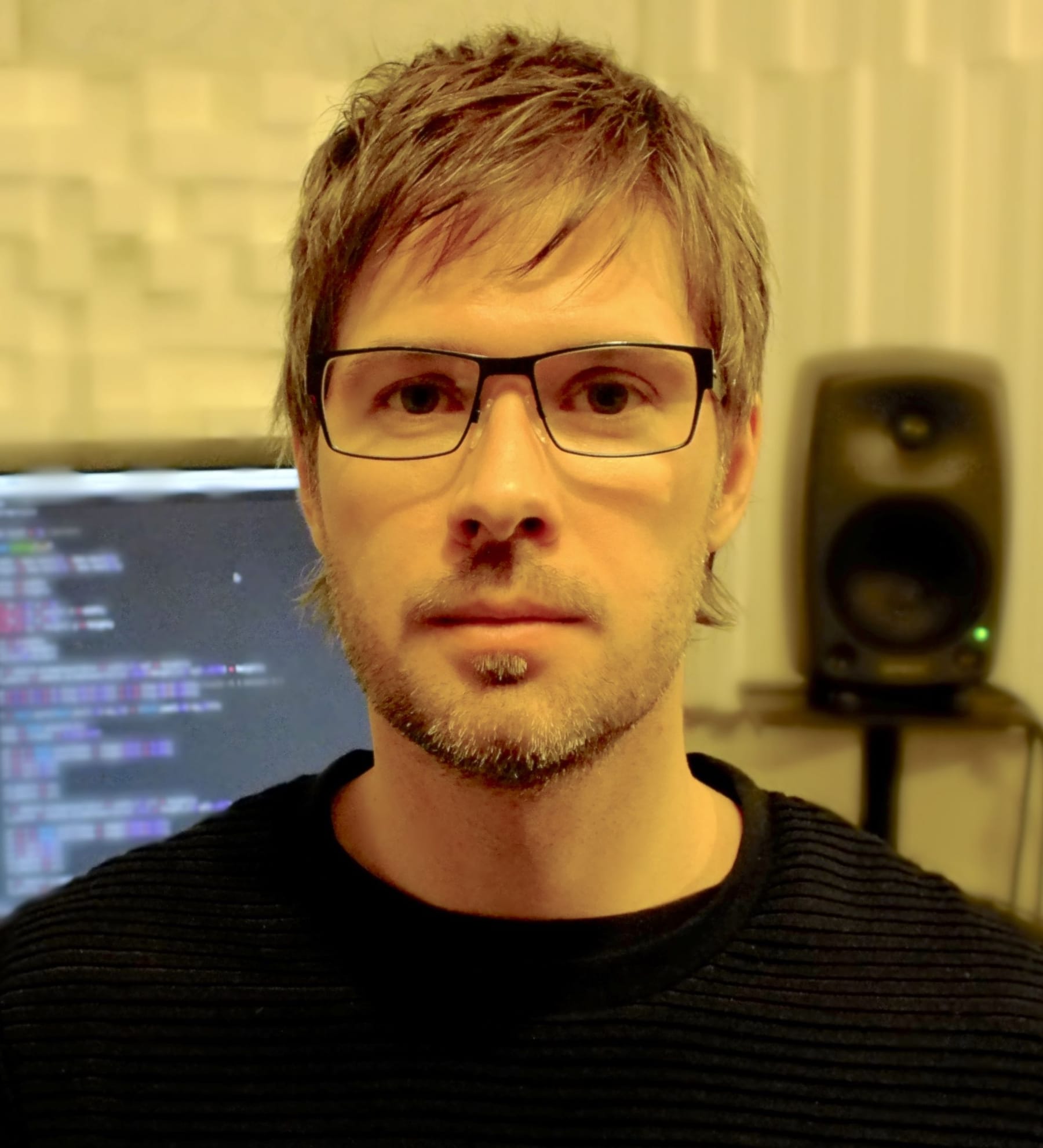
| Simone Conforti | |
|---|---|
| Biography | Simone Conforti (*1979) is a swiss composer, computer music designer, sound designer and software developer. He graduated in Flute and Electronic Music and works as professor of Computer Music Designer at the Insitut de Recherche et de Coordination Acoustique/Musique. Conforti was co-founder of MusicFit and MUSST and he is co-founder and chief technology officer of Musica Combinatoria. He has worked as software designer and implementer for Architettura Sonora, and as researcher for the Basel University, the Haute École de Musique de Genève, the Haute École de Musique in Lausanne and the MARTLab research center in Florence. Specialised in interactive and multimedia arts, his work also includes an intense activity in music-oriented technology design, a field in which he has developed numerous algorithms, ranging from sound spatialization and space virtualization to sound masking and generative music. He has been professor in Electroacoustic Composition and Computer Music both at the Conservatories of Cuneo and Florence and has worked as computer music designer at the Centro di Informatica Musicale Multimediale of the Venice Biennale. ABOUT Simone Conforti: «PlastiCity» An acousmatic work that revolves around the theme of water pollution caused by plastic. As the title suggests, the theme is addressed through the dual meaning that emerges from it: on the one hand the clear reference to how industrialisation and consumerism have led us to such an environmental crisis; on the other hand the word plastic carries within itself the meaning of the idea of material with its negative connotation that we attribute to it today but also the idea of moldability that underlies the idea of morphing the musical materials found in the piece. The theme of the confrontation between natural and artificial underlies the piece in the form of multiple compositional strategies. These can be traced: in the relationship between the main timbres, water-like sounds contrasted with those coming from the stimulation of plastic materials; in the use of a synthetic voice that, uttering the word plastic, subdivides the piece into three sections that are morphologically identified according to the applied timbral subdivision and derived from the following PLA/S/TIC segmentation; in the gradual processing of elements recognisable as acoustic, think of the synthetic voice, which become the basic elements for the generation of timbres that take us into a purely synthetic dimension; finally, the constant idea of morphing of timbre and meaning once again becomes the tool for the generation of a new hybrid territory that results in the loss of contact with the source. |
| Link | |
| go back | |