Jorge Filipe Pinto Ramos
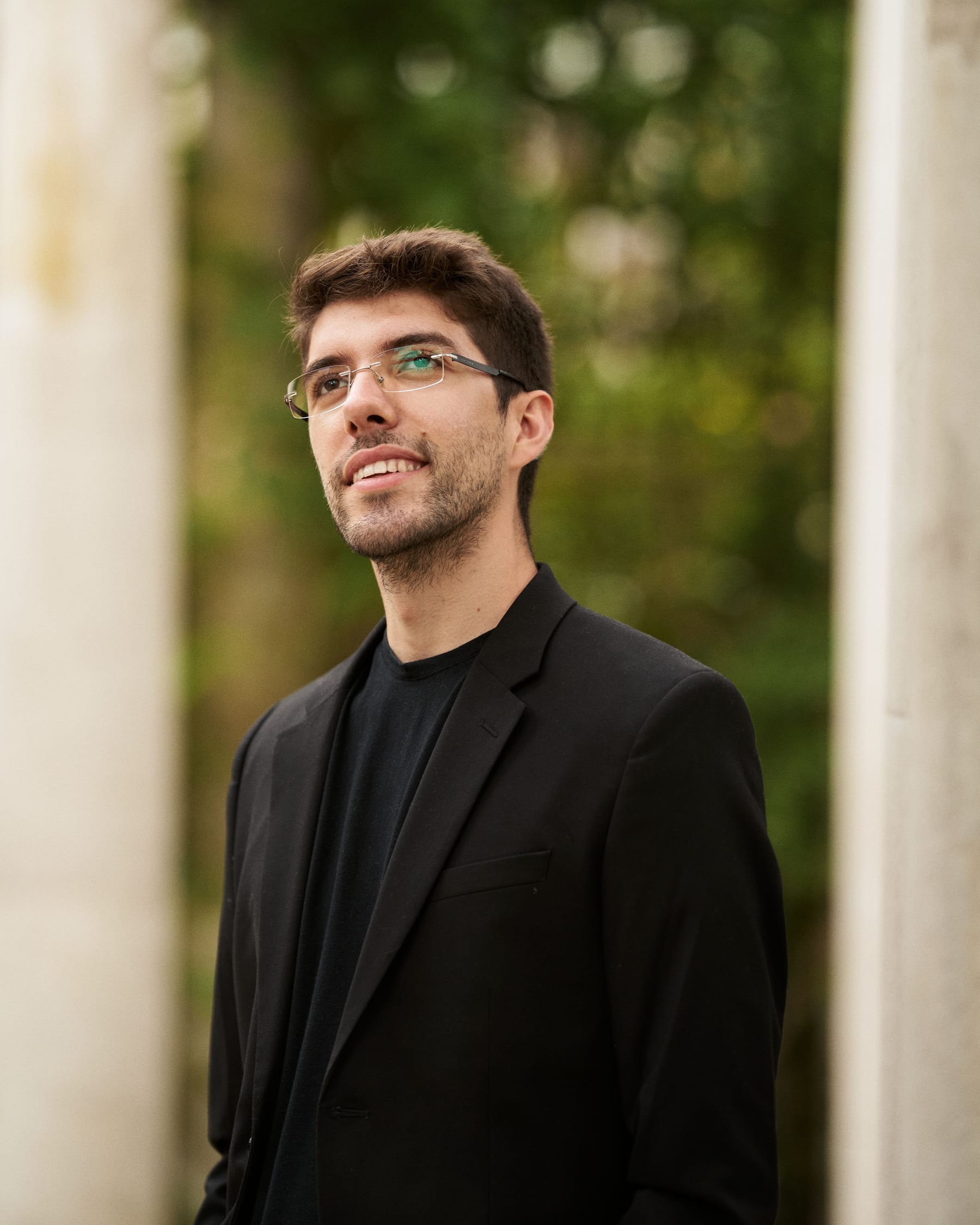
| Jorge Filipe Pinto Ramos | |
|---|---|
| Biografie | Jorge Ramos (*1995) ist ein portugiesischer Komponist, Elektronik-Performer und Forscher, der in London lebt. Er hat Solo-, Kammer-, Sinfonie-, gemischte, elektroakustische, live-elektronische, Film-, Bühnen- und Werbemusik für Festivals, Orchester, Ensembles und Solisten in Asien, Nord- und Südamerika und Europa geschrieben, darunter das Calouste Gulbenkian Orchestra, Casa da Animação, Cat's Cradle Collective, Frederic Cardoso, Orquestra Clássica do Centro, Banda Sinfónica Portuguesa, Ricardo Pires, Sónia Oliveira und The Hermes Experiment. Zu den Auftraggebern und Partnern von Ramos' Arbeit gehören nicht nur der Konzertsaal, sondern auch bedeutende internationale Solisten und Einrichtungen wie Arte no Tempo, Braga Media Arts, Braga '27, Casa da Animação, Cat's Cradle Collective, Frederic Cardoso, RE: FLUX '16 Festival, gnration, Ricardo Pires, RTP/Antena 2, Sónia Oliveira, UNDERSCORE Film Festival, und UNESCO, sowie durch prominente Stipendien und Preise der Academia de Flauta de Verão, Caixa Geral de Depósitos, Calouste Gulbenkian Foundation, Escola Superior de Música de Lisboa, Festival Internacional de Órgão de Braga, Fernando Otero, Fundação para a Ciência e a Tecnologia, iMelody Music Club, Leões de Portugal, Miso Music Portugal, Orquestra Clássica do Centro, Banda Sinfónica Portuguesa, Royal College of Music, Royal Music Association, RTP/Antena 2, Sociedade Portuguesa de Autores, Tomaribando, The ACTOR Project, The National Flute Association, and Youth Foundation. Als Doktorand am Royal College of Music London wird er von der Calouste Gulbenkian Foundation und dem Royal College of Music London gefördert, wo er auch eine Stelle als Graduate Teaching Assistant und Botschafter für digitales Lernen innehat. Darüber hinaus ist er studentischer Vertreter des Exekutivkomitees des ACTOR-Projekts - Analysis, Creation, and Teaching of Orchestration. ABOUT Jorge Filipe Pinto Ramos: «Paysage» Commissioned by Festival RE:FLUX '16 Honourable Mention at the Música Viva Festival 2021 International Electroacoustic Composition Competition by Miso Music Portugal Dennis Smalley (b. 1946) defines source bonding as the natural tendency to relate sounds to supposed sources and causes and to relate sounds to each other because they appear to have shared or associated origins. Thus, bonding play is an inherent perceptual activity. Consequently, I began to rethink how and what to think about ‘sound’ and its behaviour, and most importantly, to hear ‘sound’ differently. This self-reflection on my sonic somatic knowledge led to a broader perspective on what I, as a composer and researcher, should consider being sound as music. Hence, I wrote Paysage, a soundscape piece based on the processing of the sounds that surrounded me during the writing process. This effect was enhanced by the imposed limitations during confinement, which meant that I had to share the same house to work and to live in, which made me realize how musical sound is constantly all around us.” Written in 2021 as part of my Doctor in Music — Composition Research at the Royal College of Music in London, England. With the support of The ACTOR Project (CAN); Calouste Gulbenkian Foundation (PT) & Royal College of Music (EN). © PRS/MCPS/SPA ISWC T-304.735.045-4 |
| Zurück | |